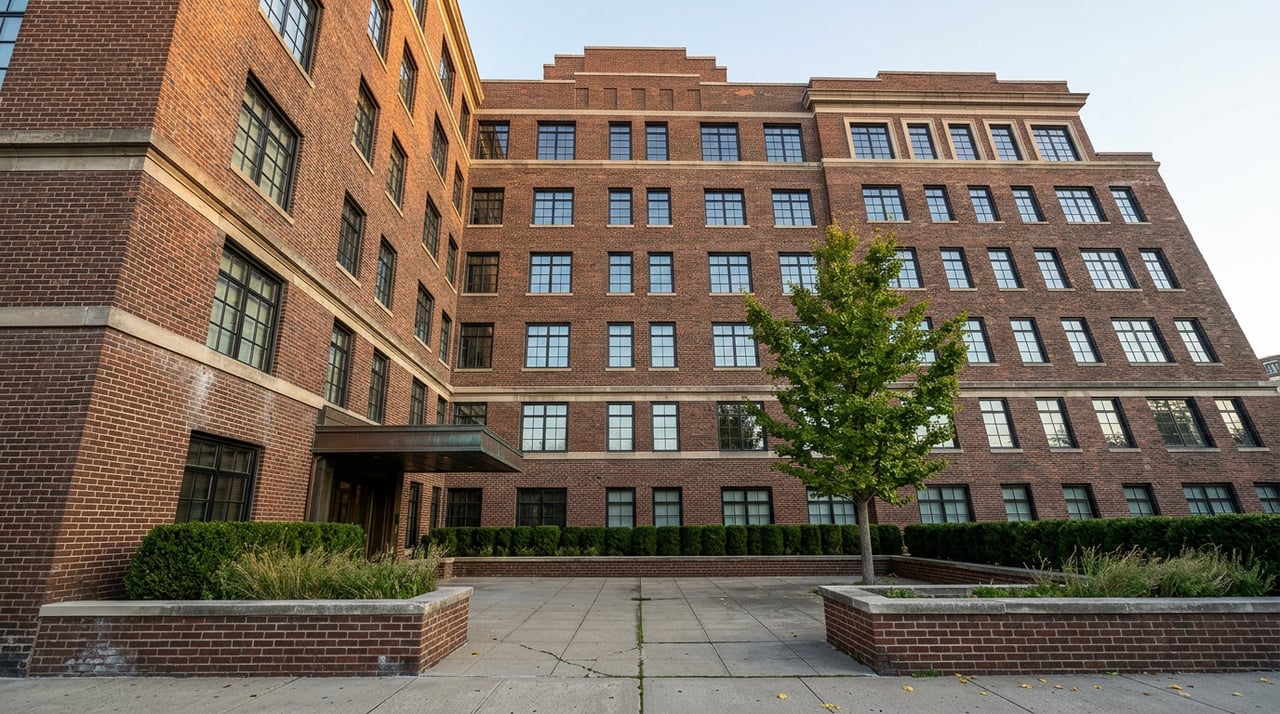
Two one-bedroom units go on the market the same month, both inside the same handful of blocks along East Jefferson, both advertising the same river view and the same walk to Belle Isle. One lists in the high five figures. The other lists for less than a used car, and the listing notes that the buyer will need board approval and can only finance through a single national lender most people have never heard of.
That second listing isn't a bargain hiding in plain sight. It's a cooperative, and it plays by different rules than everything else on the block that gets called a condo.
This is the piece of the Gold Coast story that a scroll through listing photos won't tell you. The neighborhood's median price, whatever number you're looking at this week, blends two structurally different products that happen to share a mailing address. Treating them as one market is where offers go sideways.
One Median, Two Very Different Deeds
Walk the Gold Coast and you'll pass buildings that look interchangeable from the sidewalk. Shoreline East Condominiums, a 20-story tower completed in 1966 with 247 units, is a straightforward condominium. So is Detroit Towers, an 18-story historic high-rise with only 35 units and just two residences per floor. Buy into either and you're getting a deed, a standard condo association, and financing that works the way financing works everywhere else.
A few doors down, buildings like Indian Village Manor, built in 1921, and River House Co-Op operate as cooperatives. You aren't buying real property in the traditional sense. You're buying shares in a corporation that owns the building, and the corporation grants you the right to occupy a unit. That distinction is why a one-bedroom co-op on the Gold Coast can sell for $35,000 or more while a three-bedroom condo with water views in the same corridor can command around $375,000. The spread isn't about finish level or floor height. It's about what kind of ownership you're actually purchasing.
Even Alden Towers, the 1923 apartment complex whose four eight-story buildings sit on the National Register of Historic Places, has drifted out of the for-sale conversation entirely. After a 2012 renovation, it now operates as a rental apartment community rather than condos or co-ops, which means a building people casually lump into "Gold Coast condo stock" when they're researching the neighborhood isn't actually part of the for-sale market at all.
Financing a Gold Coast Cooperative
Here's the friction that catches buyers off guard. A conventional mortgage preapproval, the kind almost every buyer walks into a search with, does not automatically work on a Gold Coast cooperative. Co-op boards typically require applicants to be approved for membership before a sale can close, and financing is often limited to lenders that specialize in cooperative share loans, most commonly the National Cooperative Bank, rather than the broad pool of banks and credit unions that finance condos and single-family homes.
Add to that an owner-occupancy requirement common in these buildings, which rules out the investor who wants to buy a co-op unit and rent it out, and you have a property type that looks like the deal of the neighborhood on a listing sheet but comes with a buyer pool that's much smaller than the price alone would suggest. That's also part of why some of these units sit. A $40,000 co-op isn't competing against every Detroit buyer with a mortgage preapproval. It's competing against the narrower group willing to go through board approval and find a lender who does cooperative share loans in Michigan.
Comparing Monthly Fees
Once you get past the purchase price, comparing monthly fees requires a closer look. Co-op association fees on the Gold Coast are frequently structured as all-inclusive, bundling property taxes, water, heat, and building maintenance into one line. Condo HOA fees typically cover building maintenance and insurance only, which means the condo owner is paying property taxes and utilities separately, on top of the HOA number quoted on the listing.
Put two units side by side, a condo with a $350 monthly HOA fee and a co-op with a $500 monthly association fee, and the condo looks cheaper at a glance. Once you add the condo owner's separate city and county property tax bill, which in Detroit runs into real money even on a modestly assessed unit, the totals can land much closer together, or flip outright. The fee on the listing sheet is not the number that determines what you'll actually spend each month. You have to ask what's inside it before you can compare two units at all, let alone compare a Gold Coast unit to something in Midtown or Brush Park.
Why the Neighborhood Median Moves Like a Seismograph
The other reason a single Gold Coast number is misleading has nothing to do with ownership structure and everything to do with volume. This is a thin market. Public listing data from March 2026 put the median sale price for Gold Coast condos at $122,450, with an average sale price near $108,026 and typical time on market around 149 days. A separate listing snapshot of the same pool showed a median list price closer to $127,000 across only 19 active condos, with just 3 homes reported sold in the trailing one-month window and typical market time near 101 days. Earlier in the year, an investor-focused analysis using the same underlying MLS data reported a median sale price of just $60,000 for January 2026, a swing of nearly 58 percent from the year before.
None of those numbers are wrong. They're each accurate snapshots of a pool so small that adding or removing a single closed sale, one co-op at $35,000 or one water-view condo at $375,000, swings the median by tens of thousands of dollars. A neighborhood where three or four sales define a month's headline number isn't a market you can read the way you'd read Midtown or Corktown, where dozens of transactions smooth out the noise. On the Gold Coast, the median is closer to a coin flip than a trend line, which is exactly why building-by-building comparison matters more here than almost anywhere else in the city.
| Building | Ownership type | Built | Size | Buyer note |
|---|---|---|---|---|
| Shoreline East Condominiums | Condominium | 1966 | 20 stories, 247 units | Conventional financing works normally |
| Detroit Towers | Condominium | Historic (pre-war) | 18 stories, 35 units, two per floor | Small building, limited inventory turnover |
| Indian Village Manor | Cooperative | 1921 | High-rise | Board approval and co-op share financing required |
| River House Co-Op | Cooperative | — | — | Owner-occupancy typically required |
| Casa Balcona Terrace | Cooperative | — | — | Ground-level units with private terraces |
What to Actually Check Before You Write an Offer
If you're comparing a Gold Coast unit against something in another Detroit neighborhood, the purchase price is the least useful number to start with. Before you get attached to a listing, find out:
- Whether the building is a condominium or a cooperative, since the word "condo" gets used loosely in marketing copy even when the underlying structure is a co-op
- What the association fee actually includes, specifically whether property taxes, heat, and water are bundled in or billed separately
- Whether your current mortgage preapproval is usable here, or whether a co-op purchase will require you to find a lender that handles cooperative share loans
- Whether the building requires owner-occupancy, which affects both your own plans and your resale pool down the road
- How many units have sold in the building or the neighborhood in the past few months, so you know whether the comps you're looking at reflect an active pattern or a handful of outlier sales
None of this shows up in a portal search filtered by price and bedroom count. It shows up in the building's governing documents and in a conversation with someone who has actually closed a transaction in that specific tower.
A Few Straight Answers
Can I get a conventional mortgage for a Gold Coast cooperative? Usually not in the same way you would for a condo. Co-op financing on the Gold Coast is commonly limited to lenders that specialize in cooperative share loans, and the building's board typically has to approve you as a member before the sale can close.
Why do some Gold Coast units sit on the market for months while others move quickly? Part of it is genuine buyer preference, but part of it is structural. Cooperative units draw from a smaller pool of buyers who are willing to go through board approval and secure specialized financing, which stretches time on market even when the price looks attractive.
Is the Gold Coast a good comparison point against Midtown or Brush Park on price alone? Not without knowing which kind of building you're pricing. A $35,000 co-op and a $375,000 water-view condo can both be technically located on the Gold Coast, and combining them in one median tells you almost nothing about what either one actually costs to own.
If you're weighing a Gold Coast unit against something in Midtown, East Village, or Brush Park, the comparison only holds up once you know which market you're actually pricing. That's the kind of building-by-building read that doesn't show up in a portal filter. If you want to work through a specific listing or figure out what your own timeline and financing look like against this corridor, Liz in Detroit can walk through the numbers with you before you write an offer, not after.
This article is general information, not legal, tax or financial advice. Consult a qualified professional about your situation.