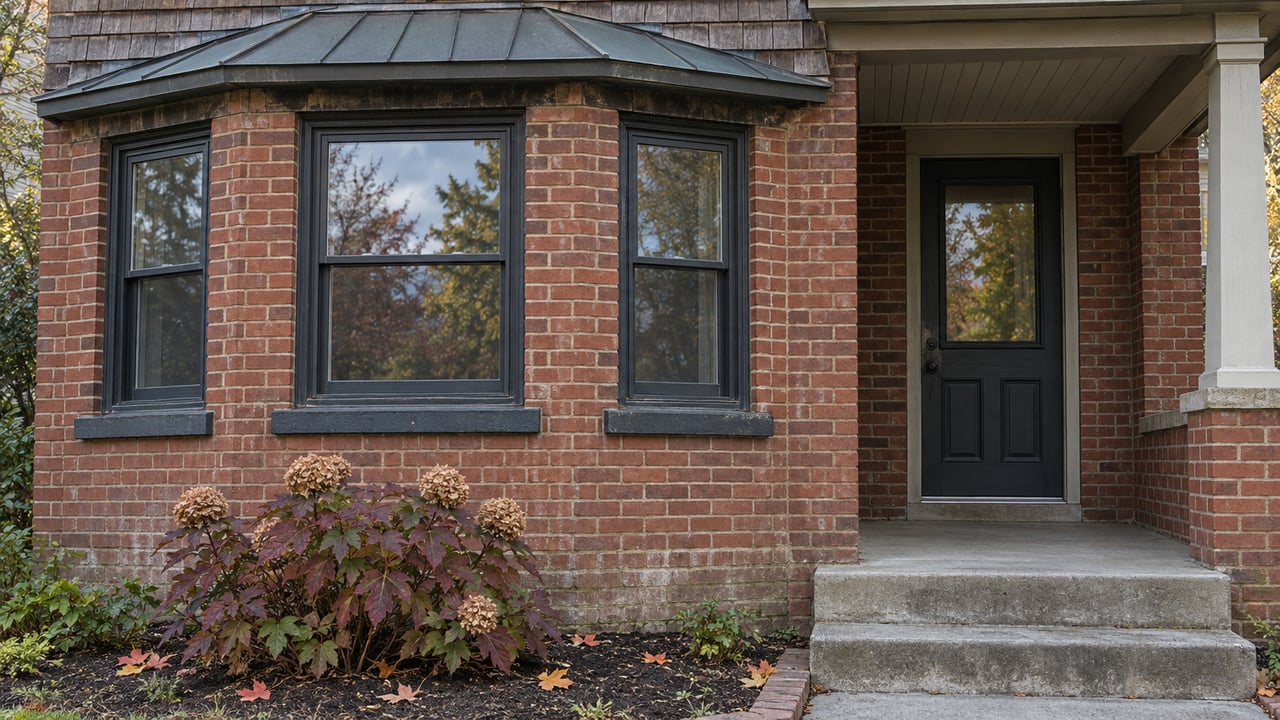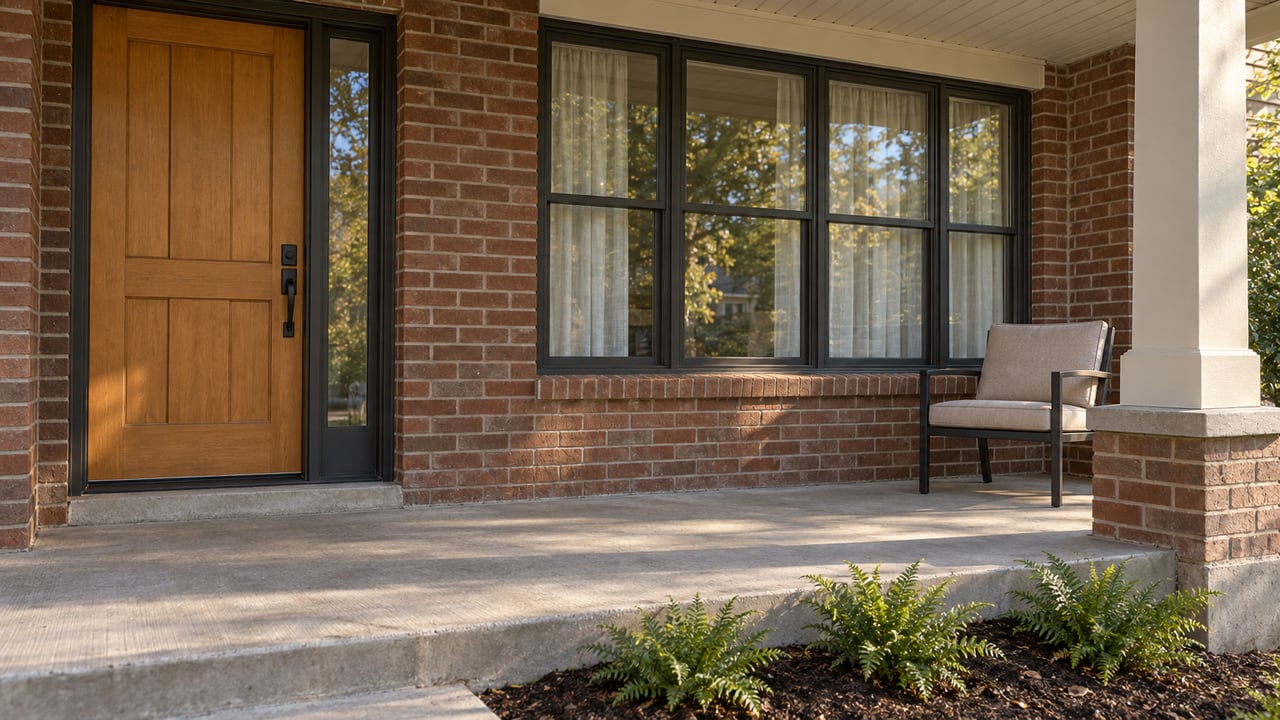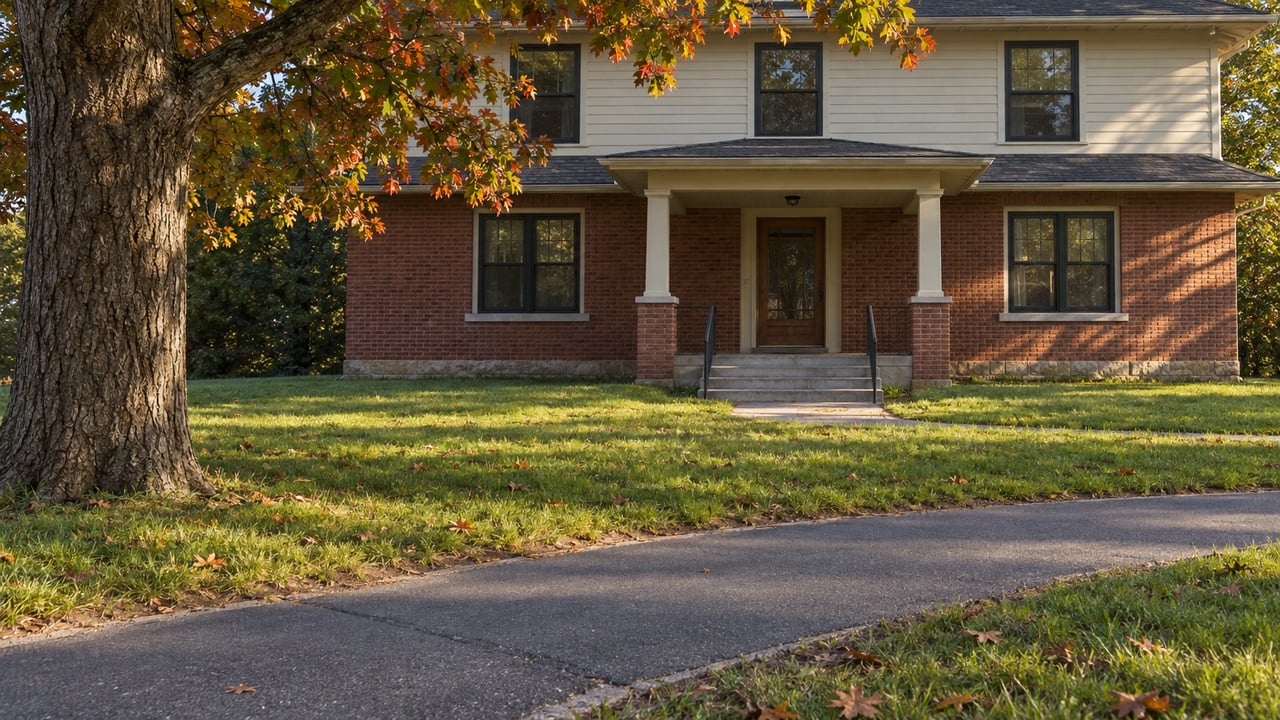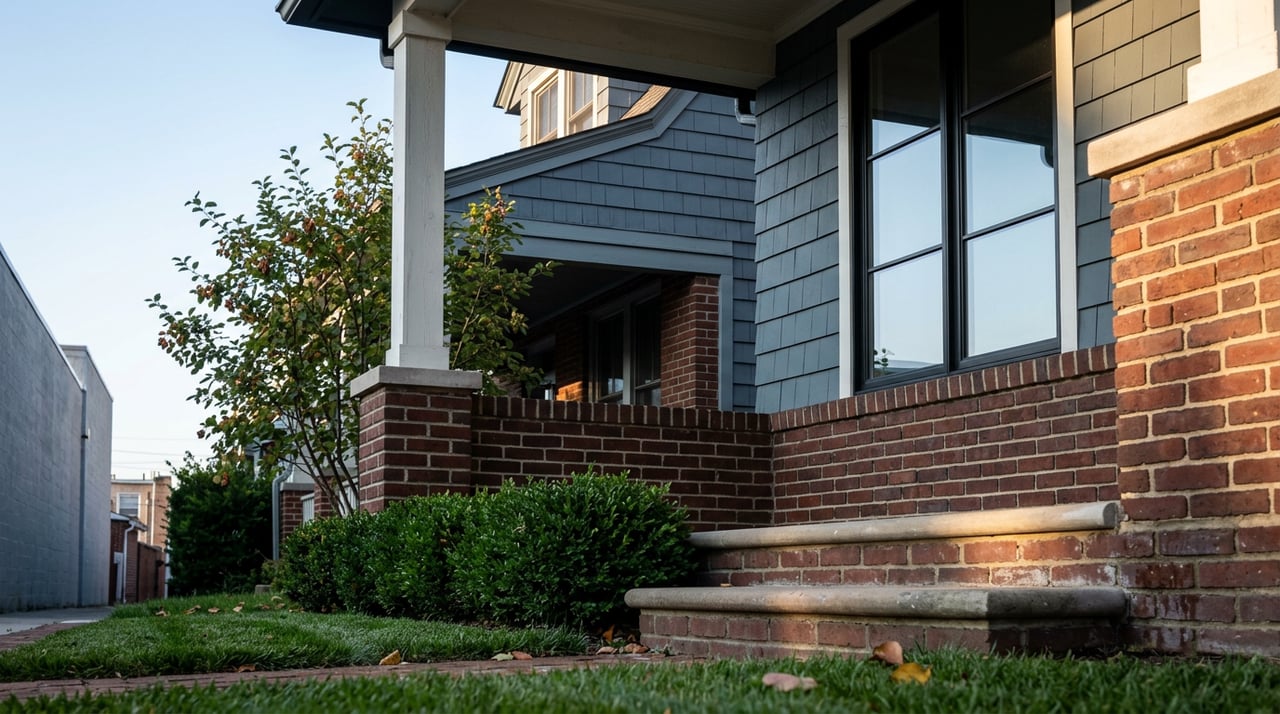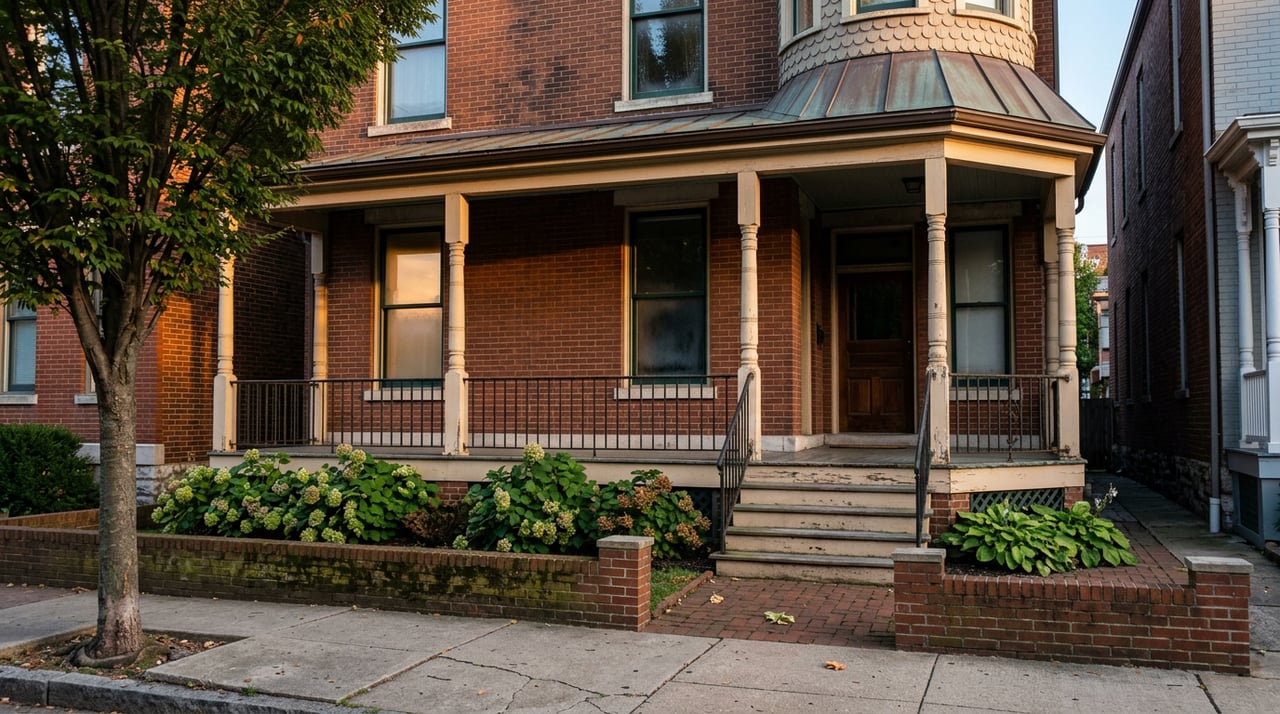
"What's the incentive for people to move here, knowing that you might be screwed with the tax you have to pay?" According to Outlier Media, Cedric Goinard asked that question after buying a historic house in Indian Village in 2024 and receiving a tax bill for $45,893.40, more than four times the amount anticipated. After months of appeals, the city cut the bill by roughly $30,000. The tax-bill story ran citywide, not because Indian Village is unusual, but because the mechanism behind it touches every Detroit neighborhood where prices have moved and ownership hasn't.
Brush Park is one of the sharpest places to see that mechanism at work, because it holds two very different tax stories on the same few blocks. Walk from a restored Victorian conversion on Alfred Street to a City Modern townhome on Watson and you've crossed from one tax regime into another, sometimes without a visible seam. One property may carry a Neighborhood Enterprise Zone abatement that cuts its bill for years to come. The other may not, and the number on its current listing sheet may have almost nothing to do with what you'll actually pay once your name is on the deed. If you're shopping in Brush Park right now, that gap is worth understanding before you write an offer, not after your first winter tax bill arrives.
The Number That Resets When You Buy
Michigan's Proposal A, passed by voters in 1994, caps how much a home's taxable value can rise each year while you own it, limited to 5 percent or the rate of inflation, whichever is lower, according to the Michigan Tax Tribunal. It's a genuinely protective rule for long-term owners. The Michigan Department of Treasury explains that a transfer of ownership can uncap a property's taxable value.
An Outlier Media analysis of the assessor's 2026 tax roll found that Detroit homes would see an average increase of about $1,403 in property taxes if sold today, and that even after removing extreme outliers, more than 1,200 homes citywide would see estimated jumps above $10,000. The pattern is especially visible in neighborhoods where prices have climbed fastest and longtime owners have held on for decades, which describes a fair amount of Brush Park's older housing stock.
You don't have to look outside Detroit's own headlines for what that looks like at the closing table. A couple who bought a Midtown duplex in November 2024 for $465,000 opened a 2025 tax bill of $19,686, against a previous owner's bill of roughly $3,500, according to reporting from ClickOnDetroit. Detroit's assessor, Alvin Horhn, has been direct about why this keeps happening: capping creates a statewide problem, and it's sharper in Detroit because the city's operating millage is high relative to other Michigan cities. None of that is a Brush Park-specific defect. It's how the system is built. It just happens to matter more here because Brush Park's mix of old and new gives you two different starting points on the same street.
What an NEZ Certificate Actually Covers
Brush Park's newer developments lean hard on Neighborhood Enterprise Zone abatements to soften that reset, and the marketing reflects it. Listings for units at Woodward Place and Crystal Lofts both advertise active NEZ status as a selling point. The Roma, a 57-unit project that broke ground at 301 and 321 Edmund Place in May 2026, built a roughly $2.6 million NEZ abatement into its financing stack alongside state and county support, according to the City of Detroit's own announcement. The tool is very much still in use in 2026, not a legacy program from Brush Park's earlier redevelopment years.
But an NEZ certificate isn't one thing. The City of Detroit's NEZ FAQ describes three flavors, and they behave differently at resale.
| Type | What it covers | Term | Renewable |
|---|---|---|---|
| NEZ-Homestead | Existing home, primary residence only | 15 years | Yes, one-time renewal if still owner-occupied |
| NEZ-Rehab | Rehabilitated structure | No | |
| NEZ-New Construction | Newly built structure | No |
The city's own NEZ FAQ spells out a detail that catches buyers off guard: the abatement applies only to the building, not the land underneath it. That means a property with an active NEZ certificate generates two separate tax bills each summer and two each winter, one for the structure at the reduced rate and one for the land at the full rate. It's a manageable quirk if your lender and title company know to expect it. It's a genuine headache at closing if nobody flags it until the first escrow statement looks wrong.
The Homestead version is transferable. If you buy a home that already carries an NEZ-Homestead certificate and you occupy it as your primary residence, you can typically step into the remaining years of that abatement. New Construction and Rehab certificates have no option to renew, though the city notes a property can apply for Homestead status once its New or Rehab certificate expires. Some of Brush Park's earliest NEZ zones date to the 2006-2007 era and have since been modified, meaning current holders keep their abatement until it expires and are then grandfathered into a one-time renewal if they still qualify. Anyone buying a rehabilitated unit from that first wave should ask exactly where it sits on that clock, because a certificate with two years left changes the math very differently than one with twelve.
"The assessment formula seems to have gone rogue," Realtor Sami Abdallah told ClickOnDetroit. "Tax bills increasing by $10,000 to $15,000 are unsustainable for most households."
The Historic Mansion Side of the Ledger
Not every desirable unit in Brush Park is new construction with an abatement attached. Carlton Lofts, inside the 1924 building originally designed by architect Louis Kamper, is one of several historic conversions where a buyer's exposure to uncapping depends entirely on that specific unit's tax history rather than on any neighborhood-wide rule. A historic condo that last changed hands a decade ago, before Brush Park's current wave of investment, could carry a taxable value well below its current assessed value. Buy it, and the reset lands on you in full, with no abatement cushioning the landing unless one happens to already be in place and transfers with you.
That distinction matters even more for investors, since NEZ-Homestead eligibility is written around owner-occupancy. If you're buying a historic Brush Park unit to hold as a rental rather than live in, an existing Homestead certificate generally doesn't carry over to you the way it would for an owner-occupant buyer, which is worth factoring into any rehab or repositioning underwriting before you commit to a purchase price.
Reform Is Being Discussed, Not Enacted
Mayor Mary Sheffield used her first State of the City address to call for cutting property taxes somewhere between 30 and 60 percent, though she's acknowledged there's no single mechanism yet in place to fund that cut. Separately, State Rep. Ann Bollin has introduced legislation aimed at eliminating Michigan's uncapping rule for owner-occupied homes entirely, a change that, according to Michigan House Republicans, would need voter approval to become part of the state constitution. Both are worth watching if you're a Detroit homeowner generally. Neither should factor into a Brush Park purchase decision today. Buy based on the tax rules in effect now, and treat any future relief as a bonus rather than a plan.
Before You Write an Offer in Brush Park
- Ask for a copy of any active NEZ certificate on the property, including its type and issue date, not just a listing sheet's mention that "NEZ taxes" apply.
- Confirm how many years remain on that certificate and whether it's a Homestead type that transfers or a New/Rehab type that simply expires.
- Request the current summer and winter tax bills, both the land and building portions if the property has an NEZ split.
- Ask the assessor's office, or have your agent ask on your behalf, for an estimate of the post-sale taxable value rather than assuming the current bill will hold.
- If you're buying to hold as a rental, verify separately whether any existing Homestead abatement survives a non-owner-occupant purchase.
None of this is a substitute for your own tax and legal advice, and every parcel's history is different enough that the specifics deserve a direct conversation with the assessor's office and your closing team. But knowing which questions to ask before you're under contract is the difference between a tax bill that matches your budget and one that arrives as a surprise.
Brush Park rewards buyers who do their homework on the building type as much as the block. If you're weighing a City Modern townhome against a historic conversion a few streets over, Liz in Detroit can walk through the specific NEZ status, remaining term, and land/building split on any property you're considering before you put in an offer. Reach out for a home valuation or just to talk through what a given address will actually cost you once the deal closes.